
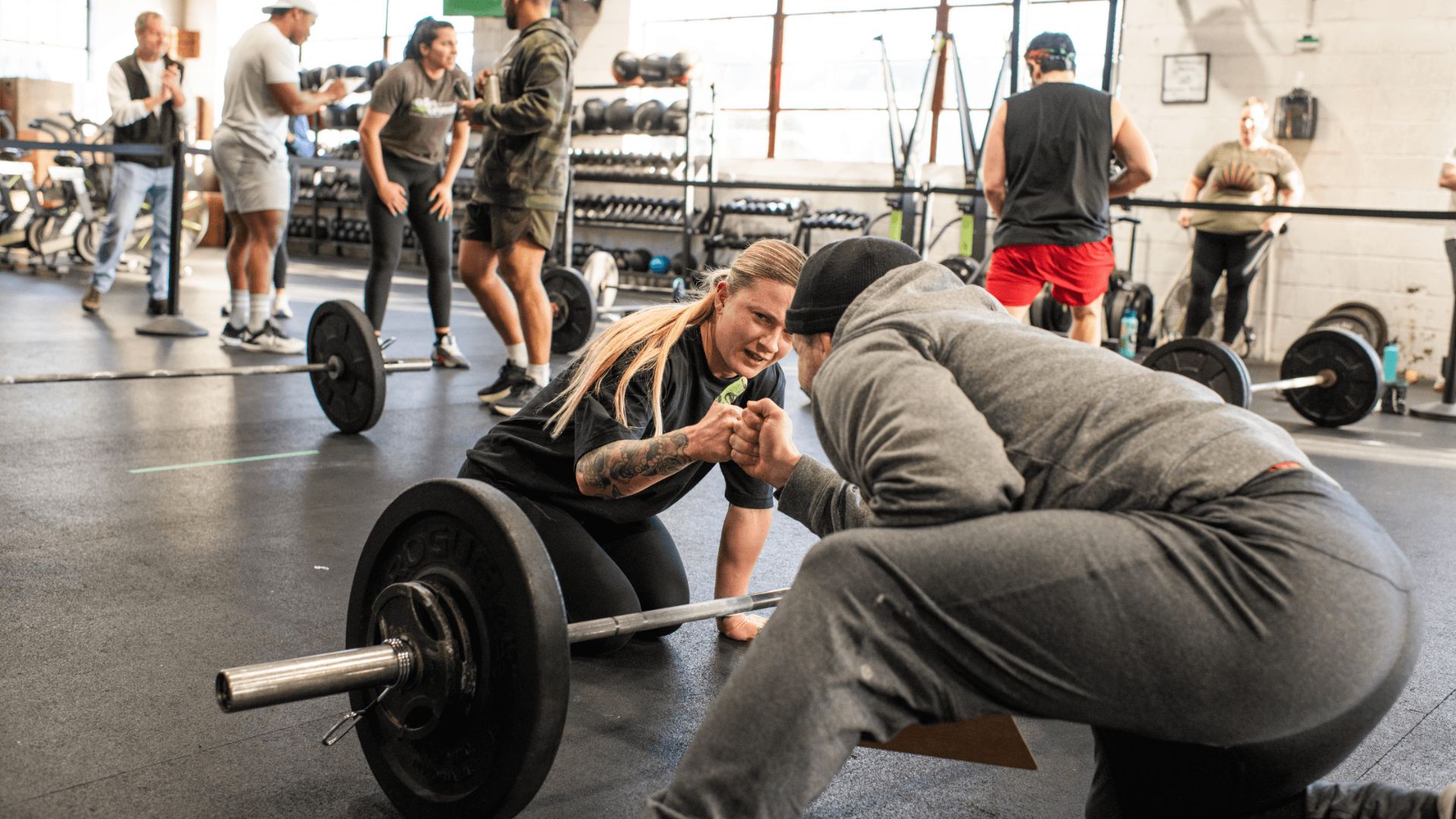
Humble is the number one core value at ODIN CrossFit. Not because it sounds good on a wall, but because it is the precondition for everything else. If you are not humble, you cannot learn. If you cannot learn, you cannot grow. And if you cannot grow, you will never reach your potential or lead anyone else toward theirs.
That said, humility at ODIN is not a personality trait you either have or do not have. It is not meekness, and it is not downplaying your skills. It is a set of specific, repeatable behaviors you practice every single class. This article is about what those behaviors actually look like on the gym floor here at ODIN CrossFit in Frederick, MD, and why scaling is the clearest daily example of that value in action.
The Everyday Behaviors That Signal Humility on the Gym Floor
Humility shows up in small, visible moments. An experienced athlete who scales a movement or drops the weight because they know it will serve them better in the long run. A newer member who comes in with a solid fitness background but keeps an open mind during coaching cues instead of assuming they already know. Someone who goes lighter to dial in technique before adding load, even when the heavier bar is right there.
What those moments have in common is a choice: doing the work that actually helps, not just the work that looks impressive. At ODIN, that distinction matters. The “sexy” version of a workout and the right version of a workout are not always the same thing.
Humility is also contagious. When one person asks for a scaling option without any embarrassment attached, it gives everyone around them permission to do the same. That is how trust gets built in a CrossFit class in Frederick, and how the gym stays a place where people are competing with their own progress rather than with each other’s egos.
Humility Is Not a Feeling, It Is a Choice You Make Before the Clock Starts
The specific moment where humility either shows up or does not is during the brief, before the workout starts. You look at the prescribed weight or movement and you ask yourself: is this actually right for my body today? That is the decision point.
When athletes skip that question and default to Rx out of habit or pride, a few things tend to happen. Form breaks down under a load or movement that is beyond their current capacity. Injury risk goes up. And the workout stops delivering the training effect it was designed for, because the person is moving too slowly or too sloppily to get the strength, speed, or endurance benefit the coach programmed. The goal was never to do the workout Rx at all costs. The goal is the stimulus. Going Rx when you are not ready does not get you closer to that goal. It just adds risk while missing the actual point.
The coaches at ODIN are there to help you make that call, with your long-term health and longevity in mind. Asking for feedback, saying “I’m not sure what I should use here,” or checking in during the brief are all humble actions. They are not signs of weakness. They are how smart athletes train.
People who push through unsustainably tend to flame out. Scaling is what allows for consistency, and consistency is what produces real progress over time.
What CrossFit Scaling at ODIN CrossFit in Frederick Really Means (and What It Does Not)
Scaling is not failing. It is choosing the right weight and rep scheme for your current fitness so you receive the appropriate stimulus from the workout.
CrossFit’s recipe for success is movement first, then consistency, then intensity. CrossFit scaling is how you follow that recipe and stay safe while doing it. Every workout at ODIN is infinitely scalable, whether you are brand new, coming back from an injury, pregnant, or just having a rough week.
Scaling is not a consolation prize for people who “can’t do it yet.” It is the smart, correct choice for whoever needs it on a given day, including coaches. If the heavier weight or harder movement means your reps slow to a crawl, your form falls apart, or you cannot sustain the intensity the workout was built around, you are not doing the workout as written. You are doing a worse, riskier version of a different workout that happens to share the same weight on the bar.
This is also not a one-time judgment about your fitness level. It is a decision you get to make every single class. Some days you will feel strong and go heavier. Other days your shoulder is cranky or you slept badly and you will scale. That is not backsliding. That is listening to your body that day.
And the sooner you get comfortable asking a coach “hey, what should I do here instead,” the sooner you stop comparing yourself to the person next to you and start making progress at your own pace. That is the only kind of progress that actually sticks.
The Behaviors Coaches Notice When a Member Gets It Right
Coaches notice a few specific things when a member is handling scaling well.
The first is asking before defaulting. A member who checks the board’s options or asks the coach before grabbing the heavier bar, without hesitation or embarrassment in their voice, is already ahead. That willingness to ask, “I don’t know, but I’ll find out,” is the tell.
The second is not qualifying their effort afterward. Someone who scales and then moves well through the workout, without adding “but I scaled” as a disclaimer at the end, is proud of the work they put in. That is the right read on it.
The third is taking the suggestion and moving on. When a coach offers a scaled option and explains the reasoning, a member who is getting it right adjusts and goes. They do not negotiate, push back, or need convincing. They trust the process and get to work.
Someone who scales and moves well will almost always get more out of a workout than someone who goes Rx and blows the time cap while missing the stimulus entirely.
Why Rx Is Not the Goal for Most People in Most Classes
Every workout at ODIN is built to produce a specific training effect: a certain intensity, a certain time domain, a certain kind of strength or conditioning stress. The Rx weight and movements are one way of hitting that effect. For most members in most classes, they are not the right way.
When the load or movement is heavy or complex enough that your reps slow to a crawl, your form falls apart, or you cannot sustain the intensity the workout was designed around, you are not doing the workout as written. You are doing a different, worse workout that happens to share the same weight on the bar.
More is not better. Better is better.
For members who have been around for a while, it helps to anchor this in the long game. Nobody remembers which exact weight you used three months in. They remember whether you are still showing up, still improving, and still moving well. One percent better every day. Scaling appropriately means the version of the workout you are doing is actually going to get you where you want to go, without a setback along the way.
What Happens to Your Progress When You Stop Scaling Too Soon
When an athlete stops scaling before they are ready, form goes first. Reps under a load or movement that is too advanced degrade mechanically before anything else shows. Consistency follows from that, because sloppy reps and overreach tend to produce nagging strain or minor injuries that cause people to miss sessions.
The thing that breaks down last, but does the most lasting damage, is the relationship to the process itself. People either get hurt enough to stop entirely, or they start associating the gym with grinding and frustration rather than progress. That is the opposite of what ODIN is trying to build.
Scaling is what allows for longevity. It is what keeps you in the gym next week, next month, and next year. The athletes who are still showing up and still improving two or three years in are almost always the ones who were willing to scale when it mattered.
How to Walk Into Class With a Humble Game Plan
Start with the brief. The brief at ODIN always includes the intended stimulus: what the workout or the weight should feel like, how many reps you should be able to hold onto at a time, what the coach is trying to get out of you that day. Paying attention during the brief gives you the information you need to make a good scaling decision before the clock starts.
Ask questions. If you have an idea for a scaling option, bring it up. Coaches love that conversation. They will explain the why, offer options that help you hit the intended stimulus, and help you pick a weight or movement that keeps you in the right zone for all the rounds, not just the first one or two.
Set your target based on today, not last week’s PR or the person next to you. Do a quick gut check on how your body actually feels: sleep, soreness, stress. Let that set the number, not your ego.
And when you walk out of class having scaled and stuck to your game plan, walk out with your head held high. You worked with your coach, made the right call for your body, got in a solid workout, and you will be able to show up tomorrow. And the day after that. And the day after that.
That is what being humble at ODIN actually looks like. If you are new to CrossFit in Frederick and still figuring out how scaling works in class, or if you have been around for a while and want to reset your approach, talk to a coach before your next session. That conversation is always worth having.
If you have not been in before, our No-Sweat Intro is the right place to start. A free, no-pressure conversation with a coach before you ever step on the floor. Book yours here →


